Saturday, May 2, 2015

Opua: a good day's work; immensely and profoundly; migration


        GANNET is transformed, or at least her interior is.
        I have not disposed of the Torqeedo, but I have banished its shaft and the outboard mount to the stern.  Not using the engine, there is no need for it to reside between the pipe berths where it takes up too much space.  When I have time to see which of the two batteries holds the higher percentage of charge, that battery will go back there, too, and the other will be placed in the trash. 
        Having removed the two largest objects formerly stowed between the pipe berths—the Spade anchor and rode to the bow; the Torqeedo the stern—has imposed neatness and order on what was cluttered chaos.  
        Torqeedo relocated, I removed the floorboards and the various waterproof boxes and bags beside them, and cleaned, wiped down with acetone, and then painted the bilge and surrounding areas.  That was last done almost four years ago.  On most boats, the bilge is unseen.  On GANNET it is always visible and had become unsightly.  
        Obviously on GANNET the surface to be painted is small and did not take long, but did require complicated contortions.
        Others might not notice much difference, but I who live here do.  In the past few weeks I have reorganized, reduced and improved GANNET’s interior in many ways that cumulatively are very satisfying.  She is lighter, better organized and less cluttered.
        I am pleased.

———

        THE NEW ZEALAND HERALD is usually a local, home town newspaper.  This is reasonable for a country whose population of 4.5 million is that of a moderate size city, about the same as the Boston metropolitan area and less than half of what is oddly known as Chicagoland.  But on occasion THE NEW ZEALAND HERALD achieves greatness.  They did so a few years ago with a supplement on the WWI Battle of Passchendaele in which New Zealand lost a thousand dead during two hours one morning.  And they did so again last week on the one hundredth anniversary of the landings at Gallipoli with a sixty page supplement titled Letters from Hell.
        Letters from Hell is composed mostly of letters written home from the soldiers, photographs, and some propaganda, which is to say lies, intended to conceal the truth and boost morale on the home front.
        The New Zealand and Australian men fought at Gallipoli with great courage.  They were willing to die, but they didn’t want to die pointlessly.  The campaign was a complete failure.  It is said that the only successful maneuver was the withdrawal after almost eight months of slaughter.
        Letters from Hell is immensely and profoundly sad.

———

        April 30 is considered the end of the cyclone season, though later storms are possible and seem to be becoming more common.
        I noticed an almost constant procession of boats to the fuel dock last week.  A loud horn while I was working this morning caused me to stick my head out the companionway.  An annual rally for those who for reasons beyond my comprehension want to sail in a herd was leaving for the islands.  More than a dozen boats.
        Had I not torn my rotator cuff I would have already left.

Wednesday, April 29, 2015

Opua: DESOLATION ISLAND; CHANCE


        What I thought to be only a lull was in fact the end of the storm.  Patches of blue sky persisted until sunset, after which the sky cleared, the wind went calm, and GANNET and I rested quietly.
        Yesterday and today have been mostly sunny, with only a few brief passing showers and gusts of wind.
        I got a number of small boat tasks done:  bought two new fenders and cut and whipped lines for them; applied sealant to the starboard lower shroud padeye; made a new screen for the companionway; scrubbed mold beside the port pipe berth and rearranged stowage there; retied the U.S. and N.Z. flags to backstay and shroud; bought what I need to oil the wood and paint the bilge.
        I’ve now gone through everything on the boat except two duffle bags of clothes.  One with ‘good’ harbor clothes; the other with passage/work clothes.  There really isn’t much difference between most of them.  When we get a day without rain I’ll take both on deck and see if anything can be tossed.

———

        On Monday I finished DESOLATION ISLAND, which is really Kerguelen Island, Number 5 of Patrick O’Brian’s Aubrey/Maturin novels.
        There is a ship chase in the Southern Ocean that ends with dramatic suddenness.  Perhaps because I’ve sailed those waters, I can visualize it; but O’Brian writes the scene wonderfully.  
        As he does an approach to Desolation Island across a severe tide rip, just ahead of an approaching gale, in a ship with a jury rigged rudder.
        I’m not giving more detail because I don’t want to spoil the novel for you if you read it.  DESOLATION ISLAND is my favorite in the series so far.

———

        I often read two books at once, and completed Vol. 1 of Edward Gibbon’s THE DECLINE AND FALL OF THE ROMAN EMPIRE the same day.   I’ve read a three volume abridgment of Gibbon’s massive work, but bought all six volumes in a Kindle edition for a couple of dollars.  I’m not sure I’ll get through them all.  The history is common knowledge.  The pleasure of the books is Gibbon’s ironic wit and intelligence.
        I’m now rereading Joseph Conrad’s CHANCE. 
        A man whose first name is Chance wrote me not long ago.  I like the name.  I’m happy with Webb; but if I weren’t Webb, I think I’d like to be Chance.  It suits me.  It suits us all.
        From CHANCE, the novel:  “The exacting life of the sea has this advantage over the life of the earth that its claims are simple and cannot be evaded.”   And:  “Sailors are not adventurers.”

Sunday, April 26, 2015

Opua: storm


        An unexpected lull in the storm that arrived precisely as forecast last night and covers most of the country with rain and gusty wind.  Gale force off Cape Brett.  Hurricane force at Wellington.  Only gusting in the twenties here at Opua, I think, but enough for GANNET to imitate her eponymous bird, soaring and diving around the mooring.
        This has been the sternest test yet of my rebedded forward hatch.  No leaks.  However, there is a leak around the deck plate on the starboard lower shroud which drips onto the small counter top beside Central.
        The storm is forecast to peak this afternoon—it is now almost 1:00 p.m.—and ease tonight.  There is a increasing patch of blue sky to the north and west, and the sun has just cast the first shadows of the day.  Much of the morning was so dark we had no solar charging.
        I prepared for the storm yesterday by pulling the Avon into the cockpit and deflating it, removing the U.S. and New Zealand flags from the rigging because they shake the entire boat flogging in strong wind, tightening the backstay, and buying a bottle of wine, bread, cheese and chorizo salami at the General Store yesterday.  I’m good for the duration.
        Patter of rain on deck.  Blue sky appearing to the south through the companionway.
        Maybe I’ll get ashore tomorrow.

———

        Yesterday afternoon I continued my inspection of GANNET’s interior.
        I removed everything from the port pipe berth and slithered aft to return the storm jib with its new luff  tape to where it is stowed beneath the spare anchor, a 15 pound Delta.  Four fenders and the PortaPotti also live back there.   I’m throwing out and replacing two of the fenders which are beyond salvaging.  
        I could see the entire stern space.  On the starboard side are the spare rudder and two trash bags of freeze dry food, thirty meals to a bag.  These are the last of the five bags I stowed before leaving San Diego.  New Zealand’s Back Country Cuisine is one of my favorite brands of freeze dry meals.  I’ll restock when I next return.
        Slithering back into The Great Cabin, I returned the new Avon and other items stowed on the port pipe berth and crawled forward onto the v-berth, where I went through the various water resistant and water proof bags there.  As I expected by moving the second Torqeedo battery and the sextant from one bag, I managed to combine the contents of two bags into one and eliminate the other.  A modest triumph.  For whatever reasons, I do take pleasure in getting rid of things.
        The second Torqeedo battery is now stowed aft.  The sextant I will carry back to Evanston with me.
        I also checked the small stowage areas beneath the v-berth and found forgotten ‘good’ plastic wine glasses that Carol and I bought at the Milwaukee Art Museum.  Lighter and more stylish than my everyday plastic.  I drank from one last evening and will again this.
        The sun is becoming warm shining through the forward hatch onto my back.

Thursday, April 23, 2015

Opua: best; restowed; apocalypse averted; bounce


        The Boston Marathon was run last Monday in conditions that the NEW YORK TIMES described as “cold and wet”.  There was some headwind.  The winning times were ordinary.  Which makes the achievement of my friend, Tim, all the more remarkable.  
        Some of you will remember that I have written about Tim before, most recently when he executed what may well be a double unique in the history of our species by running a full marathon one morning and playing violin in a symphony orchestra that evening.
        Last Monday in those unfavorable conditions Tim ran a personal best in the Boston Marathon.  I trust that he will not mind that I let you know he did this at age 50.  
        To me this is not only a personal best, but the very best kind of competition:  against yourself and time and chance and limits.
        Congratulations, Tim.  And admiration.

———
        While Tim is setting personal records for running fast, GANNET and I continue to set records for sailing slow.
        Slight wind came off the hills beyond Russell at 1100 Wednesday and I had the anchor up and was underway, if one can call it that, by 1115.
        I carry a bucket that I fill with water and a brush with me to the foredeck when I raise anchor.  Russell has a mud bottom and on THE HAWKE OF TUONELA I often had to scrub the last thirty or forty feet of chain link by link as it came up.  But except for a little mud in the crevices of the Spade anchor, anchor and rode came up clean.  I have yet to raise GANNET’s anchor in strong winds, but small anchors are one of the great advantages of small boats.  Raising GANNET’s ten pound aluminum Spade is so easy.
        The day was lovely.  Except for power boat wakes, the bay smooth.  It took us three hours to sail four miles back to the mooring which I picked up on the second attempt at 1415.  The first time I ran forward with boat hook in hand and couldn’t find the float before current pushed us away.  Gybe.  Circle.  Repeat.  Success.
        The anchor and rode in its deployment bag have been stowed along with the Torqeedo shaft and one battery, and a lot of other stuff—buckets, hand bilge pump, dinghy inflation foot pump, plastic bowl that serves as the galley sink, dust pan and brush, solar shower bag, two two-part oars, tool bag—in the space directly below the cockpit and between the aft halves of the pipe berths.
        I could not get to the anchor quickly there.   As I have noted, stowage on GANNET is like a puzzle of interlocking pieces in which to get to one you usually have to move several others in the correct sequence.   When I have known I will anchor, I have moved anchor and rode deployment bag from beneath the cockpit to the v-berth where I rest them on one of the expensively made and failed companionway curtains directly below the forward hatch.  It is much easier to pull anchor and rode through that hatch than to lift them out the companionway and carry them forward.
        While I was straightening up GANNET after our return Wednesday afternoon I removed everything stowed between the pipe berths and scrubbed the space clean.
        I returned the Torqeedo shaft and battery, but moved the Jordan drogue from the bow and stowed it beside the Torqeedo instead of the anchor and rode deployment bag.  The drogue in its deployment bag is a soft cylinder about five feet long and 10” in diameter.  More giving than the anchor.  
        I now stow the Spade anchor and rode in the bow, forward of the partial bulkhead at the forward end of the v-berth.  
        I have hesitated to do this before because of concerns that it might start banging against the hull when GANNET becomes airborne off waves in strong wind.  But hopefully I have it well padded with a life jacket, the rode, a second anchor rode, and the tarp I occasionally use as a cockpit sunshade.  Weight in the bow is not desirable; but weight anywhere on GANNET is not desirable; and I have to carry some.
        The anchor is now much more quickly accessible; and stowage, both in the bow and between the pipe berths, better organized.
        Of course, it would be better still if the Torqeedo weren’t there.

———

        I poured myself an air temperature gin and tonic at about five last evening, stood in the companionway and found myself confronted by a billowing explosion of cloud to the east.  
        The clouds continued to roil ever higher and grow ever darker.   All moving this way.  And then the whole mass just evaporated.  In ten minutes the sky was mostly clear, and I stood in the companionway and enjoyed my drink at leisure.
———

        However, our weather has changed.
        Today we’ve had some wind and rain and GANNET is caught in the rebound of small waves off the marina breakwater and bouncing up and down and around.
        Gale warning for Monday.

Wednesday, April 22, 2015

Russell: rescued


        I was rescued this morning. 
        First light is shortly after 6:00 and I was awake a few minutes later but still in the v-berth when I heard and felt a power boat pass.  Several day trip boats stop at Russell and power boat wakes are unfortunately common, so I thought nothing of it until I heard the prop wash of backing engines close by and voices.  I crawled from sleeping bag and v-berth, slid open the companionway and stuck my head out to find a 40’ sport fishing boat’s stern a few feet from GANNET’s bow with two men on it, one of them reaching out with a boat hook trying to catch GANNET’s anchor rode.
        With perplexity and some asperity, I asked, “What are you doing?”
        They looked up with surprise.  
        “Oh, sorry.  Sorry.  We thought…adrift.  You see,” and they pointed down toward the rode, “Slack.  And not on a mooring.”  They gestured toward a headland a couple of hundred meters away.  “Sorry.”
        “I appreciate your intentions, but I am anchored.”
        “Sorry.  Sorry.”  And they powered away.

        I drifted and sailed here yesterday, dropping the mooring at around 11:00 and riding the ebbing tide for the first mile or so, sails up but not drawing until we were well beyond the ferry crossing.  I experimented and found that sitting on one side of the cockpit using an oar as a paddle I increased our SOG by a half knot, from 1.8 to 2.3.  This wasn’t hard work, but I wouldn’t have been able to make headway against the current.
        Cats-paws finally touched glassy water and GANNET began to sail, even making five and six knots, and I had the anchor down outside the Russell mooring field by 12:30.  
        I had not forgotten my relearned lesson and did not tow the Avon.  In fact I may deflate and stow it in the cockpit every night.  GANNET is the closest boat to the Customs dock which at this time of year is seldom used and has become the home of hundreds of sea gulls and terns, a few of whom have recently discovered GANNET’s dinghy and spend messy nights there.  Stowing it on the foredeck or deflated in the cockpit would put an end to this as well as the need to scrub growth off the bottom every week or so.  It only takes a minute to deflate and five or six minutes to inflate.
        I pumped up the Avon and rowed ashore for a pleasant lunch at the Duke of Marlborough, New Zealand’s oldest licensed restaurant, of crisp salt and pepper calamari on a bed of greens and a glass of white wine.  I don’t usually drink before 5:00 p.m., but there are exceptions.  Followed by a fig and honey ice cream cone at a shop around the corner.
        I then shopped for essential supplies, including Laphroaig and oatmeal, as well as other liquids and staples.  Russell has two small groceries, both larger and better stocked than the Opua General Store, and with much better prices.
        I rowed back out to GANNET, had an air temperature gin and tonic with music on deck while watching a different view of the sunset.  This arm of the bay has widen to two miles between Russell and Pahia, giving a more expansive vista.  
        There was very little wind and I watched a small boat over on the Pahia side trying to get somewhere before dark. 
        Sitting at Central, I have only to lean forward, grab the edge of the companionway and pull myself up and I am standing outside surrounded by beauty.  How wonderful.  Interrupting my reading last evening, I did so and found a sliver of moon just above the silhouetted hills north of Pahia casting a thin gold thread across the water.
        10:00 a.m. now.  Sunny and pleasant.  I’m waiting for wind to sail back to our mooring.  The tide has just changed and will be against us.  I could fit the Torqeedo and power, but won’t.  I must admit that I take greater satisfaction in moving under sail alone than using the outboard. 
         I’ve thrown away a few more things the past few days, including a hopelessly moldy wind scoop.  Of all the objects I could dispose of, the Torqeedo would make the most dramatic difference in stowage space.  Shaft, two batteries, tiller arm, spare propeller.  
         I certainly don’t need the Torqeedo here, except to get to the boat yard travel lift to haul-out which would be difficult in many combinations of wind and tide and impossible in some.  But I might need it elsewhere.  The problem is that the harbors of the world are configured with the expectation that boats have motors.  I don’t mind paying for tows, but I don’t like to ask for favors, and so am more independent having the Torqeedo than not.  But I do think about jettisoning  it.

Saturday, April 18, 2015

Opua: Roberton Island


        I dropped the mooring a little before 1100 on a sunny Thursday morning in very light south wind and rode it and the last hour of ebbing tide north.
        I sail on and off the mooring and anchor under mainsail alone, but had the jib set within a few minutes when the wind shifted to the southwest as it came off Opua hill.  Until I get out into the open bay past Russell the wind gusts and drops, swirls and shifts as it comes off higher and lower land.  Between Opua and Pahia, a distance of four miles/6.5 kilometers, there are three steep hills and valleys affecting the wind.
        The day was pleasant.  GANNET sailed mostly around three and four knots and I dropped anchor at what is known as The Lagoon at Roberton Island at 13:30, taking two and a half hours to cover what is 8.5 nautical miles for a stunning average of 3.4 knots.  And GANNET is a fast boat.  
        Three other boats, two sail, one power, were in the Lagoon, all anchored close to the shore.   The Lagoon is exposed to the southwest and south, with a two mile fetch in those directions to the mainland of New Zealand’s North Island, but the wind was so slight it did not matter.  Still, I anchored well away from the shore as I always do.

        After sorting out GANNET I noticed that although I thought I had set the Yellowbrick to transmit positions every twenty minutes, it had done so every hour.  I reset the interval again.  Then  pumped up the Avon and rowed ashore, climbed the trail to the lookout, admired the beauty, watched a few boats moving about the islands,
and took photographs, mostly with my iPhone whose easy panoramas I enjoy.


        The other boats left while I was ashore, and three two person kayaks arrived and were pulled up on the beach.  Not long after I was back on GANNET, I watched them paddle away and thought for a while that I was going to have the anchorage to myself for the night.  Essentially I did.  
        While sitting on deck, listening to music and sipping wine, I watched two sailboats came in at last light, one a small catamaran about GANNET size, the other a 45’ sloop.  Both proceeded far past GANNET to anchor just off the beach.  I have wondered why people do that, especially since most have outboards on their dinghies, and surmise that most people on boats remain creatures of the land and have the illusion of safety there.

        Just after sunset the wind died completely as I expected it would and, not having bothered to put the Torqeedo on the transom, I had to wait until 1100 the next morning for wind to return.
        In a rare exception from my usual practice, I left the Avon inflated and towed it.  I thought I would sail to Russell four miles distant, anchor and row ashore for lunch.  However the wind fulfilled the ‘light and variable’ forecast, often dying completely, leaving GANNET motionless on a silver and glassy bay.  When wind returned it headed us.  The dragging Avon slowed our progress and made loud gurgling sounds, while GANNET made her way through the water almost soundlessly.
        Noon passed and we weren’t even to Tapeka Point a mile north of Russell.  I gave up on lunch ashore and ate a protein bar.
        Finally we made the turn south and passed Russell at 13:30.  
        The forecast of several fine days had changed and today, Saturday, was accurately predicted to be intermittently rainy and windy, so I kept on sailing and was back on the mooring at 14:30 for an average speed of 2.4 knots.  I repeat:  GANNET is a fast boat.  And in fact we were about the only boat sailing, both the fastest and slowest on the water.
        I checked the Yellowbrick tracking page and saw that on the return it did transmit positions every twenty minutes, a more useful interval for a daysail track.

        The three day forecast now is for two lows and two highs to pass over the country.

Wednesday, April 15, 2015

Opua: Warwick Tomkins, Jr. and FLASHGIRL


        As I was preparing to sail GANNET from her mooring a few weeks ago, a man on a handsome red hulled boat on the next mooring called to me.  I couldn’t quite hear what he said and replied that I was going sailing, but would be back in a few hours.
        I noticed, as any sailor would, that his boat, FLASHGIRL, is obviously a sailor’s boat.  About 40’/12 meters long, very tall rig, bendy mast, clean lines.
        A courteous interval after I had sailed back onto the mooring, I heard the call, “Gannet”, stood in the companionway, and found the man from the red boat in his dinghy along side.  He introduced himself as Warwick Tomkins.  I asked, “The Commodore?”  He smiled affirmation.
        Many of you will know the name.  This Warwick is Warwick Junior and he became a Cape Horner at age four when Warwick Senior sailed around Cape Horn from the east in the 110’ German built pilot schooner, WANDER BIRD, with his wife, two small children, two crew, and four paying guests.  
        I have since spend some time with Warwick and have been given a tour of FLASHGIRL as he has of GANNET.  FLASHGIRL’s took longer and was done standing up.
        It has been decades since I’ve shared a harbor with someone who has sailed more than I have.  I’m ahead on circumnavigation 5-0.  But Warwick has no interest in circumnavigating and has surely done more miles.  He is a decade older than I and, of course, having made a much better choice of parents, started more than two decades younger.
        I believe we both found it interesting how much we share in common and how similar our views on boats.  Boats have tillers, not wheels; dinghies are rowed, not outboarded.  We disdain insurance.  We like ocean passages.  When compromises are made on a boat, sailing performance is primary.  And that is only the beginning.
        We don’t agree on jib furling gear:  GANNET has it; FLASHGIRL does not.
        I have seldom seen a boat that I like as much as FLASHGIRL, with her open interior, double berth in the stern, and clever ventilation with air moving naturally from forward hatch through the cabin and out a hatch in the transom, which also provides light aft.  And, as I mentioned, tall mast.  Essentially the same size a hull as EGREGIOUS and THE HAWKE OF TUONELA,  FLASHGIRL is my kind of boat.  But then it would be, it was conceived and finished by one of the world’s most experienced sailors.
        It was a pleasure and an honor to meet Warwick.
        Here are links:
         an article about FLASHGIRL.  
        All provided to me by Larry, for which I thank him.

———

        The low associated with the front that passed two or three days ago is well east of New Zealand, but still causing gusty winds that are howling around the mast at this moment and a few brief passing showers.  Possible hail was forecast for Auckland today.  
        Worse than the gusts is that the wind is from the south to southwest.  The places I’d like to anchor, Russell and Roberton Island, are both exposed to the south and southwest.  So I’ll wait until tomorrow.  Or Friday.  Or maybe just go for a daysail and return to the mooring one day.

Tuesday, April 14, 2015

Opua: deplated; delayed


        I had plates on GANNET.  
        I did not know that I had plates on GANNET until I removed everything from the Blue Performance Bag above the starboard pipe berth that serves as the galley locker in order to glue it back in place. 
        Gannet has no lockers and few bins.
        This bag, as well as three others, is Velcroed to the smooth inside surface of GANNET’s hull.  Another is screwed into the port forward side of the main bulkhead.  
        The Velcro on the galley bag was coming unstuck, so I used contact cement to reattach it and the bag.
        I never look into that bag, just reach in and fumble around for whatever I need, usually the small bag in which I keep cutlery and a cork screw, or a plastic tumbler, or the china coffee cup that has thus far survived.  So the plates came as a surprise.  
        As you may remember I eat out of a large plastic measuring cup.  I don’t recall that I have ever used the plates, which were also plastic.  I don’t even recall buying them.  Certainly they failed the not having been used for a year standard.  
        I considered for a moment if I might ever need plates, and decided that if I do I will buy paper ones for the occasion.  
        GANNET is plateless.

 ———

        Following the passing of the front, today has been mostly sunny, windy and cool.  About 50°F/10°C last night, which I know to many of you on the wrong side of the Equator would be longed for warmth.
        I rowed ashore this morning without difficulty, but had a hard row back against gusting wind and ebbing tide.
        Rowing is very good for my shoulder.
        The wind is gusting now, perhaps close to twenty knots and GANNET is heeled over and dancing about her mooring.  So I am probably going to give the wind another day to decrease and sail on Thursday, though if it moderates by noon tomorrow I may sail up and anchor off either Pahia or Russell and go ashore to provision.             
        I much prefer anchoring off Russell; but Russell is exposed to winds from the west and southwest, the direction from which it is now blowing.
        Whenever I sail I’ll have the Yellowbrick sending up positions at twenty minute intervals.
        
        Wine and music this sunset will be enjoyed perhaps standing in the companionway, perhaps sitting here at Central.

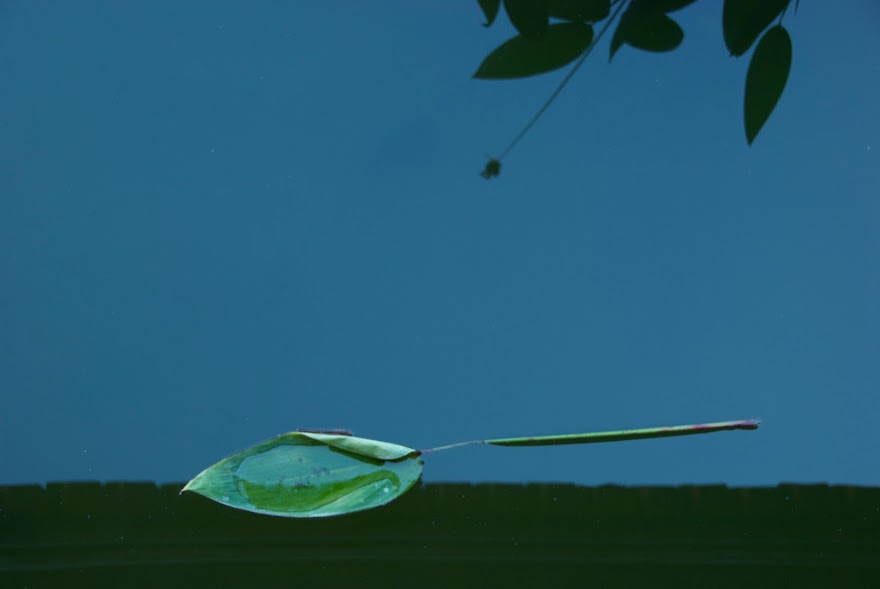
         I posted this entry, poured some red wine, stood in the companionway and found myself looking at the above.

Opua: deplated; delayed


        I had plates on GANNET.  
        I did not know that I had plates on GANNET until I removed everything from the Blue Performance Bag above the starboard pipe berth that serves as the galley locker in order to glue it back in place. 
        Gannet has no lockers and few bins.
        This bag, as well as three others, is Velcroed to the smooth inside surface of GANNET’s hull.  Another is screwed into the port forward side of the main bulkhead.  
        The Velcro on the galley bag was coming unstuck, so I used contact cement to reattach it and the bag.
        I never look into that bag, just reach in and fumble around for whatever I need, usually the small bag in which I keep cutlery and a cork screw, or a plastic tumbler, or the china coffee cup that has thus far survived.  So the plates came as a surprise.  
        As you may remember I eat out of a large plastic measuring cup.  I don’t recall that I have ever used the plates, which were also plastic.  I don’t even recall buying them.  Certainly they failed the not having been used for a year standard.  
        I considered for a moment if I might ever need plates, and decided that if I do I will buy paper ones for the occasion.  
        GANNET is plateless.

 ———

        Following the passing of the front, today has been mostly sunny, windy and cool.  About 50°F/10°C last night, which I know to many of you on the wrong side of the Equator would be longed for warmth.
        I rowed ashore this morning without difficulty, but had a hard row back against gusting wind and ebbing tide.
        Rowing is very good for my shoulder.
        The wind is gusting now, perhaps close to twenty knots and GANNET is heeled over and dancing about her mooring.  So I am probably going to give the wind another day to decrease and sail on Thursday, though if it moderates by noon tomorrow I may sail up and anchor off either Pahia or Russell and go ashore to provision.             
        I much prefer anchoring off Russell; but Russell is exposed to winds from the west and southwest, the direction from which it is now blowing.
        Whenever I sail I’ll have the Yellowbrick sending up positions at twenty minute intervals.
        
        Wine and music this sunset will be enjoyed perhaps standing in the companionway, perhaps sitting here at Central.

Opua: deplated; delayed


        I had plates on GANNET.  
        I did not know that I had plates on GANNET until I removed everything from the Blue Performance Bag above the starboard pipe berth that serves as the galley locker in order to glue it back in place. 
        Gannet has no lockers and few bins.
        This bag, as well as three others, is Velcroed to the smooth inside surface of GANNET’s hull.  Another is screwed into the port forward side of the main bulkhead.  
        The Velcro on the galley bag was coming unstuck, so I used contact cement to reattach it and the bag.
        I never look into that bag, just reach in and fumble around for whatever I need, usually the small bag in which I keep cutlery and a cork screw, or a plastic tumbler, or the china coffee cup that has thus far survived.  So the plates came as a surprise.  
        As you may remember I eat out of a large plastic measuring cup.  I don’t recall that I have ever used the plates, which were also plastic.  I don’t even recall buying them.  Certainly they failed the not having been used for a year standard.  
        I considered for a moment if I might ever need plates, and decided that if I do I will buy paper ones for the occasion.  
        GANNET is plateless.

 ———

        Following the passing of the front, today has been mostly sunny, windy and cool.  About 50°F/10°C last night, which I know to many of you on the wrong side of the Equator would be longed for warmth.
        I rowed ashore this morning without difficulty, but had a hard row back against gusting wind and ebbing tide.
        Rowing is very good for my shoulder.
        The wind is gusting now, perhaps close to twenty knots and GANNET is heeled over and dancing about her mooring.  So I am probably going to give the wind another day to decrease and sail on Thursday, though if it moderates by noon tomorrow I may sail up and anchor off either Pahia or Russell and go ashore to provision.             
        I much prefer anchoring off Russell; but Russell is exposed to winds from the west and southwest, the direction from which it is now blowing.
        Whenever I sail I’ll have the Yellowbrick sending up positions at twenty minute intervals.
        
        Wine and music this sunset will be enjoyed perhaps standing in the companionway, perhaps sitting here at Central.